

Our Corporate Social Responsibility (CSR) Policy
Aware of our impact, at FORTAL Group we have implemented concrete actions to reduce our ecological footprint, including solar electricity production, optimised waste management, and improved energy efficiency. We also strive to foster an inclusive and safe working environment, ensure ethical business practices, and collaborate with suppliers who share our commitment to sustainable development.
Our vision and actions recognised in 2025
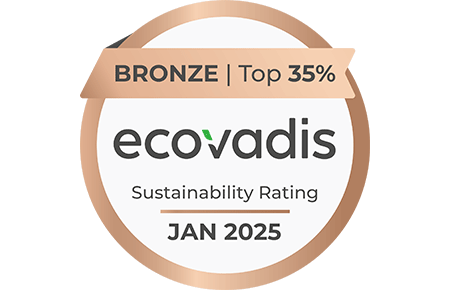
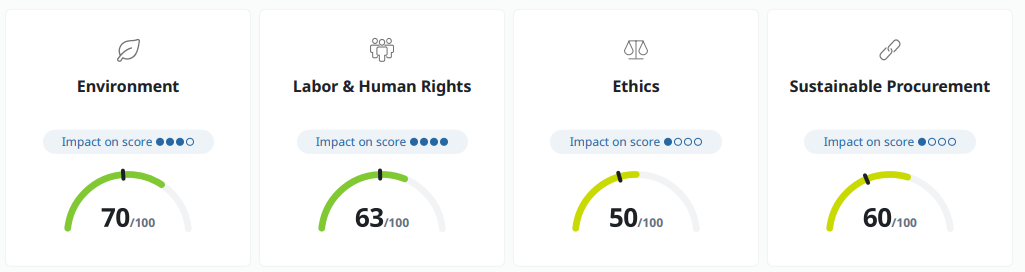
Our vision and actions were recognised with the EcoVadis Bronze Medal in 2025
EcoVadis is the world’s leading platform for assessing the CSR performance of companies. It evaluates continuous improvement approaches across four key pillars: environment, social conditions and human rights, business ethics, and responsible purchasing — examining our willingness to act, the procedures we put in place, and the awareness we build across our ecosystem.
This distinction marks a key milestone, and we remain fully committed to a continuous improvement approach, striving to go even further and actively contribute to a more responsible future.
Environmental Policy
Since 1981, FORTAL Group has been committed to protecting people through the design of secure height access systems. But this commitment extends beyond human safety — it also encompasses environmental protection. Faced with the challenges of climate change, the depletion of natural resources, and the need to reduce greenhouse gas emissions, FORTAL Group integrates sustainable and responsible practices into its production process. As a French company deeply rooted in Alsace, FORTAL Group actively contributes to the ecological transition by adopting eco-responsible solutions.
This commitment is reflected in our day-to-day operations. At our Alsatian site, we have implemented rigorous waste management — sorting paper, bottles and cups, and treating industrial waste — while regularly raising awareness among our employees about best practices. We have also invested in sustainable infrastructure: solar-panel-covered canopies now shade the employee car park, and around ten electric vehicle charging stations are available for staff use. These concrete actions reflect our determination to act at every level of the company.
Our 2030 goals
At FORTAL Group, our commitment to environmental protection is built on clear principles and concrete actions aimed at reducing our ecological impact at every stage of our operations. These commitments are structured around several key pillars that reflect our company values and our determination to play an active role in the ecological transition.
Energy consumption
Reduce the company’s energy consumption by 20% by end of 2030, compared to 2012 levels.
Water consumption
Reduce water consumption by 10% by end of 2030, compared to 2020 levels.
Pollution Prevention
Effectively prevent air pollution by implementing actions aimed at minimising the company’s environmental impacts by 2030.
Carbon Footprint
Reduce GHG emissions by 2030 compared to 2023 levels: 40% reduction for Scopes 1 and 2 (absolute value) and 12% reduction for Scope 3 (economic intensity).
Raw Material Management & Waste Management
Increase by end of 2030 the share of recycled raw materials used in production, particularly aluminium (target: 50%) and steel (target: 30%).
Waste Management
Recycle or recover 90% of waste produced by end of 2030 (by weight). Reduce the total amount of waste generated by 20%.
Training & Awareness
Raise awareness among 100% of employees on climate and environmental issues by end of 2026, with a particular focus on the themes of waste, food, and mobility.
Our 2024 Carbon Assessment
Each year, we carry out our carbon assessment to measure all greenhouse gas emissions generated by our operations: energy, transport, raw material purchases, business travel, and much more. In 2025, we established the figures for the previous year — an exercise that has become essential for evaluating our impact and defining concrete reduction targets.
Because environmental transition is built day by day, all our employees are actively engaged on several fronts: mobility, energy consumption, waste management and recycling, eco-design, and the responsible selection of suppliers, taking into account their own environmental footprint.
And the figures speak for themselves. In 2024, our actions delivered concrete results we are proud of:
We produced 10 400 tonnes of CO2e over fiscal year 2024, a reduction of -15% compared to 2023.
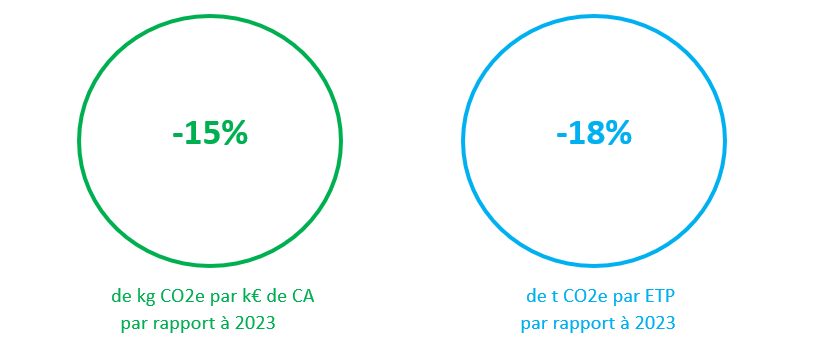
70% of our carbon footprint is linked to raw material purchases — and we know it. That is why we are acting directly at the source.
For several years, we have been working closely with our suppliers to integrate recycled aluminium into our supply chain. A demanding, long-term approach that is bearing fruit: the share of recycled aluminium in our purchases increases every year.
We continue to raise our standards — across all our practices, sourcing, and partnerships.
Social Policy
Employee Quality of Life and Working Conditions (EQLWC) is a priority at FORTAL Group. Our regular engagement surveys reflect a motivated team with confidence in the company’s future — with a score of 90% in our most recent edition in 2025.
Our working environment is designed to combine comfort and balance: pleasant surroundings, practical facilities, flexible hours, and recovery time all contribute to a healthy professional lifestyle. We continuously invest in health, safety, and ergonomics through a risk prevention policy, training programmes, and well-being initiatives.
Company life also holds an important place: activities, seasonal events, and internal communications punctuate our daily routine and strengthen connections among all Group employees.
Business Ethics
At FORTAL, our commercial activities are guided by strong values: integrity, ethics, responsibility, and transparency. These values are at the heart of our Corporate Social Responsibility (CSR) approach.
Our FORTAL Ethics Charter provides clear guidelines to our employees and business partners on our moral and societal commitments.
Responsible Purchasing
Committed to an eco-responsible approach, FORTAL Group chooses quality materials designed to last and respectful of the environment:
- Aluminum : sourced from the 5000 and 6000 series, it is infinitely recyclable and meets the requirements of sustainable development
- Wood : sourced from FSC or PEFC certified forests, these labels guarantee sustainable management that is environmentally responsible, socially beneficial, and economically viable
- Stainless steel fasteners : compliant with European recycling legislation, in particular Directives 2000/53/EC and 2002/95/EC
90% of our Tier 1 suppliers are European, ensuring strong traceability throughout the entire production chain.